

Everyone is aware of the truth that the devil is in the details. Broad agreements and general agendas, no matter how well intentioned and high-minded, many times falter in the attempted resolution of the details of their execution. The Torah represents not only the exalted general principles of meaningful life and necessary morality, but it also presents us with the nitty-gritty details that form the building blocks for such a noble life. Thus the parsha of Yitro, which dealt with the exalted general picture of Torah and Godly service as revealed at Sinai, is followed hard by the parsha of Mishpatim which is replete with the small details that eventually make up the great issues of human life.
Thus in this parsha of Mishpatim we come face to face with the situations in life that trouble us and sap our moral will. In a world that forces us to interact constantly with other human beings, there are times when our own self-interest conflicts with the welfare of others. How are we to deal with such situations? How does the Torah wish us to treat servants, orphans, the poor and the defenseless? What about damages and torts and conflicting property claims and rights? Anyone who has witnessed the usual behavior of the two drivers involved in a minor fender-bender accident will quickly realize that unless there is a moral internal discipline which has previously been clearly detailed and taught enforced in such a situation, the human damage will be far greater than the property damage. And therefore the logic of the detailed halachot and mitzvot, which comprise most of the subject matter of parshat Mishpatim following parshat Yitro, is clear and understandable.
The Talmud relates to us that a potential convert to Judaism appeared before the great Hillel and asked to be converted while “standing on one foot.” Hillel responded by telling him that the core of Judaism lay in the rule “that what is hateful to you should not be done by you to others.” This is in accordance with the later statement of Rabbi Akiva that “You should love your fellow human friend as you love yourself.” But Hillel added an important corollary to this noble and exalted, but very general, rule of Jewish life. He told the convert to make certain that you go ahead and study carefully the “rest” – the details of the great rule. For without such study and mastery of those details, the rule itself remains merely a platitude, an idealistic theory that carries with it no behavioral demands or necessary holy actions. It is practical behavior, rules of law and discipline, that create a society where love for one’s fellow and sensitivity not to do hateful things to others become possible and accepted norms of conduct.
The Rabbis of the Talmud stated that “one who desires to be considered a pious and righteous person must first study the words of the Torah as they deal with the laws of damages, torts, property and commerce.” For it is in those everyday difficult confrontations with life and the real world, with the obstinacy of others and the temptations of greed and imagined gain, that the character of the righteous and pious is formed and annealed. In Torah, honesty and justice, compassion for others and strength of moral character, are not generalities or ideals. They are to be translated into everyday actions and behavior patterns. Only through the knowledge and implementation of the laws of parshat Mishpatim can the great vision of parshat Yitro be realized.
Shabat Shalom.
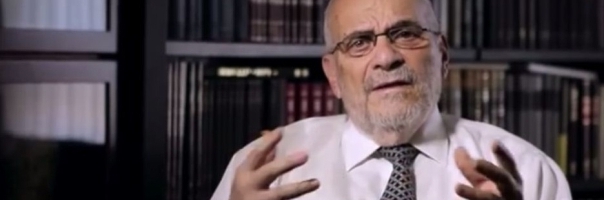
Rabbi Berel Wein
Text Copyright © 2000 Rabbi Berel Wein and Project Genesis, Inc.