

 |
| Chamber of the Wood |
In each of the four corners of the Women’s Courtyard were chambers measuring 40 cubits (60 feet) to a side and each chamber served a different purpose. The southeast chamber was called the Chamber of the Nazirites. A nazirite is a man or woman who, for a set period of time, accept upon themselves not to drink wine, cut their hair, or contract corpse-tumah. When the term of their vow is complete the individual was required to come to the Temple and offer certain sacrifices. The meat of the offering was brought to the Chamber of the Nazirites to be cooked, and the nazirite would also receive a haircut in this chamber and then the cut hair would be thrown into the fire beneath the pot cooking the offering.
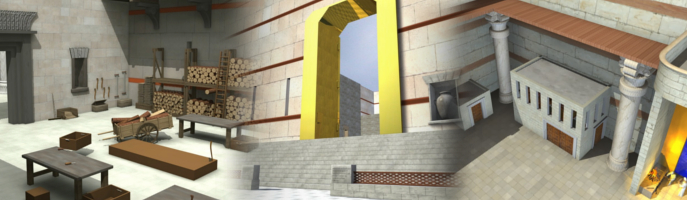
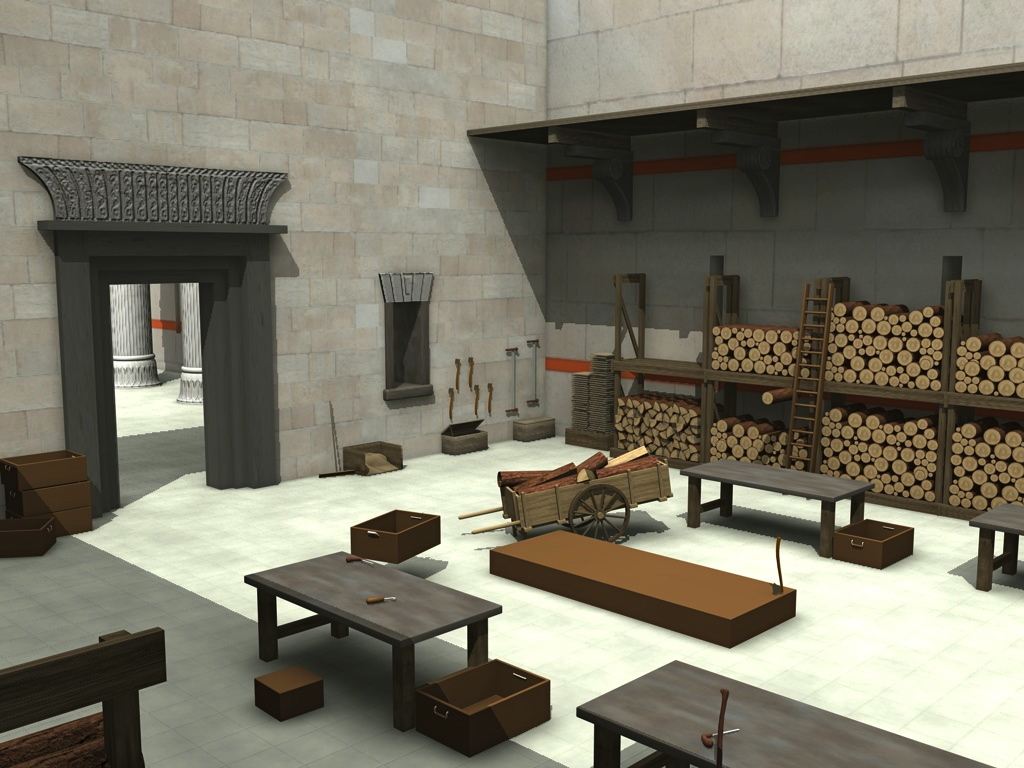
In the northeast corner of the Women’s Courtyard was the Chamber of the Wood where Kohanim would inspect firewood for use upon the Altar. Each and every piece of wood had to be checked to determine if it was free of worms, since any piece of wood containing worms was not fit to be burned upon the Altar.
In the northwest corner stood the Chamber of the Metzoraim. Metzoraim (sing., metzora) are individuals who have contracted tzaraas, an affliction brought on by the commission of certain transgressions and whose physical symptoms must be recognized and diagnosed by a trained Kohen. When the Kohen has determined that the tzaraas affliction has passed, the metzora was required to undergo a purification process which involved the offering of sacrifices in the Temple. At one point during the course of this purification process the metzora was required to immerse in a mikveh [ritual bath] and would do so within the northwestern chamber in a mikveh built for this purpose.
The chamber in the southwest corner was called the Chamber of the Oils and served as the storage area for the Temple’s supply of oil, wine, and flour, all of which were used daily in large amounts. It was named for the oils stored here since oil was present in greater quantities than wine or flour.
_______________
For more information on this topic, and to submit questions or comments for the author, please visit the blog post of this class.