

This dvar Torah was adapted from the hashkafa portion of Rabbi Yissocher Frand’s Commuter Chavrusah Series on Parshas Chayei Sara: #1488 – Visiting A Sick Person Who Has Corona or Other Contagious Diseases. Good Shabbos!
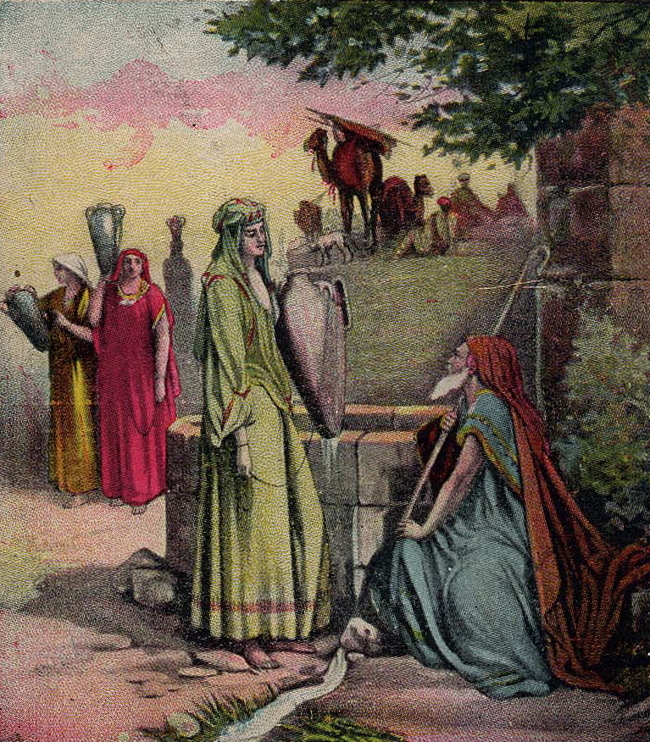
I heard an interesting ha’ara (insight) in the name of Rabbi Ephraim Wachsman. Parshas Chayei Sara contains the very elaborate story of Eliezer going to find a shidduch (marriage match) for Yitzchak Avinu. It is not the longest perek (chapter) in the Torah, but it is a very long perek. I think it’s 62 pesukim (verses).
We really get a picture of the whole story and who Eliezer was. Rashi quotes the Gemara, “Yafeh sichasan shel avdei avos yoser mitorasan shel banim” (The ordinary conversation of the servants of the Patriarchs is dearer than the Torah teachings of their descendants). The Torah spends so much time on this story.
Rav Wachsman’s ha’ara is that Eliezer really lived an illustrious career. Eliezer was not an ordinary eved (slave). The Gemara says about Eliezer that the reason the pasuk refers to him as Damesek Eliezer, is because he drew from and gave others to drink from his master’s Torah. Eliezer apparently was the talmud muvhak (primary disciple) of Avraham Avinu. He gave over the Torah of Avraham Avinu to the masses. On top of that, depending on which Chazal you learn, when Avraham Avinu fought the four kings, who did he take with him? He took Eliezer with him.
Eliezer was there for Avraham Avinu. He was an eved ne’eman (trustworthy). He did many very choshuva (important) and glorious things in his life. Why then, out of the whole life and career of Eliezer eved Avraham, does the Torah spend so much time telling us about this shidduch? Why is this Eliezer’s finest moment? The answer is because this story really tells us about the gadlus (greatness) of the personality of Eliezer.
How does this story highlight the gadlus of Eliezer? Chazal say that Eliezer had a daughter of marriageable age. In Eliezer’s mind, there could be no greater shidduch for his daughter than the son of Avraham, his rebbi muvhak (primary teacher). Eliezer wanted that shidduch for his daughter.
Avraham Avinu had to tell him, “My dear Eliezer, you’re a great talmid (student), but you are arur (cursed) and I am baruch (blessed). The cursed cannot attach themselves to the blessed. You are arur because you are a descendant of Cham, who was cursed, along with his descendants. I’m sorry. We don’t mix. It’s like a commoner asking the Queen of England to marry her daughter. You’re a commoner, we’re royalty.”
That’s what Eliezer was told. We need to assume that Eliezer was human. It was a crushing rejection. Being told that you are an arur is worse than being told that you are a nobody. His daughter was mamash (literally) not ra’uy (worthy). Eliezer must have been crushed. No one likes rejection, whether it’s in a job, or a shidduch, or anything. It’s very hard to handle. As I often say, I deal with bochurim (yeshiva students). A good portion of my shiur is going out now. A bochur can go out with a girl so many times and he’s all ready to go and then the girl says no. And then I’m left to pick up the pieces. A bachor can come back mamash destroyed and can get knocked out for months.
What does Eliezer do? Avraham Avinu tells him, sorry, you’re not worthy of this. Oh, and by the way, can you go find a shidduch for my son Yitzchak? It’s as if a father tells a boy, “I’m sorry, my daughter doesn’t want you, you’re not her type, you’re not good enough, you’re not good in learning. Listen, how about your chavrusa (study partner), who I hear is good in learning? Can you redn the shidduch?” People can’t take that. But Eliezer dusts himself off, gets off the ground and goes about this shlichus (mission) with a hislahavus (enthusiasm), devotion and zrizus (alacrity), as if it doesn’t faze him. Where did he get such a koach (inner strength)?
The Medrash in Bereishis Rabba darshens (expounds) the pasuk, “Vayomer Avraham el avdo zekan beiso hamoshel bechol asher lo” (And Avraham said to his servant, the elder of his household, who ruled over all that was his). The pshat (simple meaning) of the pasuk is that “hamoshel bechol asher lo” means he was in charge of Avraham Avinu’s whole estate. However, the Medrash darshens, “shehayah shalit b’yitzro kamohu” (that he ruled over his inclination like his master). He was in control of himself. He was in control of his emotions. He didn’t let this get the best of him. It takes a meshunadike kochos hanefesh (extraordinary inner emotional strength) to accept such a defeat and keep moving forward. He had such shlita (self-control) over himself that he could just move on.
The truth of the matter is, we find this same quality in our parsha. “Vayihiyu chayei Sora meiah shanah ve’esrim shanah ve’sheva shanim shenei chayei Sora” (And the life of Sora was one hundred years, and twenty years, and seven years; these were the years of Sora’s life). Rashi says: “Shnei chayei Sora, kulan shavin letova” (the years of Sora’s life – they were all equally good).
Any objective reading of the chumash would cause us to come to the conclusion that Sora’s years weren’t so great. In fact, Sora had a very difficult life by any standard. She was barren for 90 years. She had all sorts of tzaros (troubles). And what’s even more perplexing is that Chazal say that the name Sora or Sarai means sorer or serara (an expression of rulership and authority). She was in control. She was a shaltita (one who exercised mastery). She was a queen. She was serara (authority).
Serara? She is such a sorer that she gets captured by Pharaoh and winds up in his house! Where is the serara? The same thing happens again by the Plishtim. Where is the serara? Where is the shlita?
The answer is that it is the same as by Eliezer. It’s the same koach. She was a sorer, she had serara, but it was over herself. She never let anything destroy her and crush her. That’s why she’s Sora, meaning serara, because she’s in charge. She had this admirable midda (character trait), to which we all aspire, not always successfully. We have setbacks in life and sometimes they really knock us for a loop and it’s hard for us to recover. But here are two examples of people who had very difficult situations and circumstances in life, but they remained the shalit (master) over themselves.
This can enable us to be masbir (explain) a new thought about a very famous Medrash, which we have spoken about in the past. The famous Medrash says that Rabbi Akiva was darshening and the tzibbur (congregation) was falling asleep. This Chazal provides chizuk (encouragement) to any rabbi or rav or speaker. “If they can fall asleep by Rabbi Akiva, then it is not such a big deal if they fall asleep by me as well.” Rabbi Akiva sought to awaken them with something that would grab their attention. Rabbi Akiva asked, why was Esther zoche (privileged) to reign over one hundred and twenty-seven provinces? Let Esther, who was the descendant of Sora, who lived one hundred and twenty-seven years, come and rule over one hundred and twenty-seven provinces. That is the end of the Midrash. (Parsha 58, section 3)
Rabbi Akiva seems to have darshened a gezeira shava (comparison based on identical wording), connecting 127 and 127.
However, Rav Nissan Alpert explains that Rabbi Akiva is conceptually connecting Esther to Sora. He explains that Esther is also a personality like Sora. This tzniustikke (modest) girl living in the house of Mordechai Ha’tzaddik (the righteous) gets chosen in this beauty contest that she participated in against her will. She gets put in the palace with this menuval umukkash shechin (disgusting, loathsome contemptible person), yet she survives. She doesn’t only survive, she thrives.
She becomes the heroine who saves Klal Yisrael (the Jewish people). Why didn’t she throw in the towel? Why wasn’t she crushed? Why wasn’t she dejected? Because she had this koach that Sora had. Sora srora. It’s that same koach that Eliezer had, which is the koach of ha’moshel bechol asher lo (one who rules over all that is his), mastery over oneself. May we all aspire to and succeed at being moshel (master) over ourselves and not letting the vagaries of life knock us out and destroy us.
As we all unfortunately know, this week we lost Rav Dovid Feinstein zecher tzaddik livracha. I had almost no personal connection to Rav Dovid Feinstein. I once called him with a personal shayla (halachic question) about a kashrus issue, I forget what it was. I called him up. He answered the phone. I asked him the shayla. He said mutter (permitted). It wasn’t a discussion. There was no pilpul (Talmudic analysis).
Rav Dovid Feinstein was very close to Rav Meir Zlotowitz. Rav Meir Zlotowitz learned by Rav Moshe Feinstein but he was extremely close to Rav Moshe’s son, Rav Dovid Feinstein. Very close.
Rav Meir Zlotowitz did not make a move without Rav Dovid Feinstein. So when Artscroll had these occasional fundraising weekends, of course, Rav Dovid Feinstein was always invited. There was a Rabbanishe (rabbinic) table. Rav Dovid Feinstein was there, Rav Reuven Feinstein was there, as well as some other people. My wife and I sat on that table together with Rav Dovid Feinstein and his Rebbitzen and Rav Reuven Feinstein and his Rebbitzen on about two or three occasions.
I do not remember Rav Dovid Feinstein saying a word. Not a word. But he knew everything. He knew it all. When they had real major league shaylos, he was the final word, not only in halacha but also the discussions of the Moetzes Gedolei Hatorah (Council of Torah Sages). He didn’t speak up a lot, but when they asked him and he would explain his opinion, that was it. He mamash knew everything.
I just want to share a story that I read this week about Rav Dovid Feinstein.
It is well known that Rav Dovid Feinstein would daven shacharis (pray the morning prayer service) in MTJ Tiferes Yerushalayim on the Lower East Side, and then he would walk down the block to a pizza shop and order a bagel and coffee. That’s what he did every single morning, a bagel and coffee from the pizza shop.
Someone once had the temerity to ask him, “Why does the Rosh Yeshiva need to walk down to the pizza shop? I’m sure that the yeshiva can provide a cup of coffee and a bagel.” Rav Dovid Feinstein opened his drawer and took out his contract that Rav Moshe Feinstein wrote when he hired him to be a rebbe in the yeshiva, which is in itself an amazing thing. I don’t know if there’s any other yeshiva like that. He he takes out the contract. “The contract says what I should do and what I’m going to get paid, but it doesn’t say anything about me having the right to eat in the yeshiva. That is not part of the contract. So how can I take a bagel and coffee if I don’t have reshus (permission)? It’s not part of the employment agreement.” That speaks to his incredible ehrlichkeit (integrity), besides the yedias Hatorah (Torah knowledge), besides the seichel hayashar (sound judgment), and besides being knowledgeable in sciences and miley d’olmo (worldly matters).
Rav Meir Zlotowitz told me that for many years he made arrangements and took Rav Dovid Feinstein and his Rebbetzin on vacation. One time, he took them to the Grand Canyon. Whenever Rav Dovid Feinstein saw a plant, he would explain the plant.
Rav Meir Zlotowitz shared this amazing story that they were in the Grand Canyon, which is one of the most magnificent sights in the whole world. When I go to the Grand Canyon, I make a bracha (blessing) “oseh ma’aseh bereshis” (who performs the work of creation). If you make an “oseh ma’aseh bereshis” for harim gedolim (great mountains), I don’t know why you can’t make “oseh ma’aseh bereshis” on the Grand Canyon.
In any case, Rav Dovid Feinstein is there, looking over the Grand Canyon. Rav Meir Zlotowitz asked, “Should we make an “oseh ma’aseh bereshis?” Rav Dovid Feinstein answered “I don’t know, I have a sofek (doubt). I don’t want to make the bracha.” Suddenly, there’s a lightning strike, at which point he says, “Baruch atah Hashem elokeinu melech ha’olam oseh ma’aseh bereshis.”
Dovid Hoffman; Baltimore, Maryland; [email protected]; Editor
David Twersky; Jerusalem; Editor Emeritus
This week’s write-up is adapted from the hashkafa portion of Rabbi Yissochar Frand’s Commuter Chavrusah Series on the weekly Torah portion. View a full listing of the halachic portions for Parshas Chayei Sara.
A complete catalogue can be ordered from the Yad Yechiel Institute, PO Box 511, Owings Mills MD 21117-0511. Call (410) 358-0416 or e-mail [email protected] or visit http://www.yadyechiel.org/ for further information.