


This dvar Torah was adapted from the hashkafa portion of Rabbi Yissocher Frand’s Commuter Chavrusah Series on Parshas Vayishlach: #1491 – Learning T’nach at Night? Good Shabbos!
Parshas Vayishlach contains the infamous incident with Dina bas Leah. Dina went out to see the daughters of the land. The pasuk says that Shechem, the son of Chamor, from the city of Shechem, the prince of the land, saw Dina and he violated her. Then the whole incident occurred of Shimon and Levi taking revenge for this brazen horrible act.
Rashi famously comments on Dina bas Leah, asking, “And not the daughter of Yaakov?” Wasn’t she also the daughter of Yaakov? Why does the pasuk attribute her only to Leah? Rashi says that because of her going out, she is called the daughter of Leah, because Leah too was accustomed to going out, as it says, “And Leah went out to meet him.”
Rashi, over here, based on Chazal, criticizes both Leah and Dina, referring to both of them as a yatzanis, a woman who goes out frequently, an out-and-about person, which was a slight deficiency according to Rashi, because that is not how a bas Yisroel should conduct herself. She should not mingle among the people. Rashi is, in effect, saying, like mother, like daughter, or to use another expression, the apple does not fall far from the tree.
However, there’s an interesting Pirkei D’Rebbe Eliezer (Perek 38) that has a whole different take on this story with Dina. The Pirkei D’Rebbe Eliezer begins with a pasuk in Amos: “Uba habayis” (He came into the house), “vesamach yado al hakir” (and leaned his hand on the wall), “uneshacho nachash” (and a snake bit him). Obviously, it’s an allegorical pasuk, but the gist of the pasuk is that Yaakov came to the house, he put his hand on the wall, and the snake bit him. What does this Pirkei D’Rebbe Eliezer mean?
“When Yaakov came into the house” refers to him entering Eretz Yisrael, which is his rightful achuza (inheritance), and it is considered his home. The snake bit Yaakov. Who’s the snake that bites Yaakov that the pasuk is referring to? This is Shechem, son of Chamor, who violated the daughter of Yaakov.
There’s a peirush (commentary) on the Pirkei D’Rebbe Eliezer from the Radal, who writes as follows:
When Yaakov moved back to Eretz Yisroel, he did not want to live among the people of Shechem because Shechem was a bad city with bad people, with prutzim (licentious) and promiscuous, wanton people. So rather than living in the city, he bought property adjacent to Shechem, where he pitched his tent and established his home.
According to the Radal, the Medrash is saying that Yaakov appears to have foreseen through ruach hakodesh (Divine inspiration) that the Chivite snake would provoke him in this place. Chivya means snake in Aramaic. Yaakov Avinu did not live in Shechem proper because he knew that he would be bitten by a snake there. Therefore, he distanced himself, encamping outside the city, on the parcel that he had purchased. Nevertheless, when he leaned his hand on the wall, the snake bit him. He didn’t move far enough away. Yaakov was still too close. Although he had moved to the outskirts, the analogy is that he put his hand against the wall and the nachash bit him. That’s how the Radal interprets the Medrash.
The Pirkei D’Rebbe Eliezer is saying different than Rashi. Dina was not a yatzanis. She was not out and about. In fact, according to the Pirkei D’Rebbe Eliezer, she was sitting inside the tent. She was a tzenius’dike (modest) girl. However, Shechem ben Chamor wanted her. So what did Shechem do? He brought playful girls outside, playing b’tupim u’mecholos (with drums and dances), like it was a parade. Dina, who normally doesn’t leave the confines of her own home, sees all these women with a band having a good time. They’re singing, and dancing. Dina went out to see the girls who were playing, to see what’s going on, and Shechem seized her, lay with her, and violated her. And what happened? Unfortunately, she became pregnant from that encounter and she gave birth to a girl, whose name was Osnas.
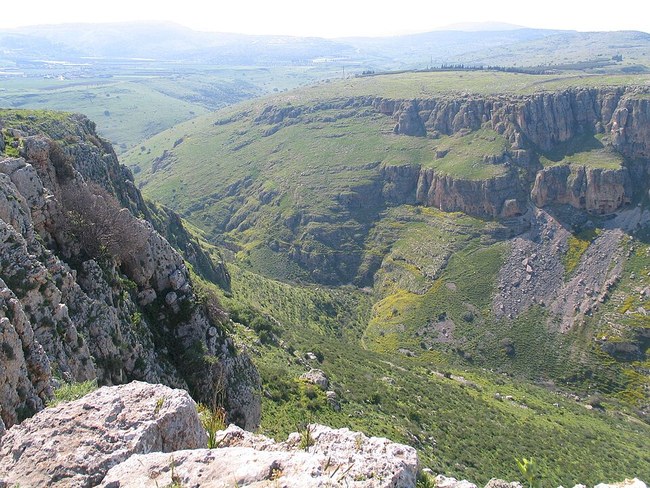
The Ramban asks, so what happened to Dina? After this incident, she just falls off the map. According to the pshat (plain interpretation), she remained bound to her brothers, living in widowhood. She, in fact, remained a spinster the rest of her life. Why? Because she was considered defiled in their eyes. She was embarrassed and she was shunned by society, as it is written, “because he defiled Dina their sister.” Our Sages disagreed about her, but the view closest to the truth is that Dina stayed with Shimon the rest of her life. She never married. She never lived a normal life. She went down with them to Mitzrayim and there she died. Shimon took her up, buried her in Eretz Yisroel. Her burial place is known until this very day, in the city of Arbel, next to the kever (grave) of Nittai Ha’arbeli.
I was in Lakewood this week and a yungerman named Reb Yaakov Slatus came over to me with a ha’arah (observation). Many of you know him. His father is a rov (rabbi) in Savannah, Georgia. He asked, why is Dina buried – of all places – next to Nittai Ha’arbeli? He shared a very interesting ha’arah, which I want to be mosif (add) on a little, but the ha’arah is his.
How many times is Nittai Ha’arbeli mentioned in Shas? Once. Where is Nittai Ha’arbeli mentioned in Shas? In a Mishna in Pirkei Avos. What does Nittai Ha’arbeli say in Pirkei Avos? Nittai Ha’arbeli says, distance yourself from a bad neighbor, do not associate with a rasha (wicked person), and don’t give up hope in the face of tzoros (troubles), in the face of puranios.
Rabbi Slatus explains, that is why Dina is buried next to Nittai Ha’arbeli. According to this Pirkei D’Rebbe Eliezer, what was Yaakov’s mistake? The Radal explains that Yaakov lived outside of Shechem, but not far enough away. Neshacho nachash because he wasn’t sufficiently harchek mishachen ra (distant from a bad neighbor). You need to run the other way. And that is why Dina is buried next to Nittai Ha’arbeli. That was his ha’arah.
My son Yakov was mosif another ha’arah. How is the conclusion of Nittai Ha’arbeli’s statement about not giving up in the face of tzoros related to this Pirkei d’Rebbe Eliezer?
The Pirkei d’Rabbi Eliezer says that the other children wanted to kill Osnas. She was like a living shame to the house of Yaakov. Now the whole world will say there is immorality in the tents of Yaakov. So what did Yaakov do with his granddaughter, Dina’s daughter? He wrote the shem hakodesh (the holy name) on a tzitz (plate) and made a necklace out of it. Osnas wore it. Yaakov sent her away out of his house.
Everything is revealed before Hakadosh Baruch Hu. Michael Hamalach came and brought her down to Mitzrayim, to the house of Potifera. Potifera adopts Osnas. The Pirkei d’Rebbe Eliezer says that Potifera’s wife was barren and therefore she raised Osnas as a daughter. Osnas bas Potifera. Remember, what does Osnas have around her neck? The shem of Hashem. Osnas was destined to be Yosef’s wife. Somehow or another, Osnas needs to marry Yosef. And later in Mitzrayim, Yosef did marry her, as it says, “He gave him Osnas daughter of Potifera, priest of Ohn, as a wife.” Yosef married Dina’s daughter.
What came out of that? Menashe and Ephraim, two of the shivtei Koh (the tribes of God). Nittai Ha’arbeli said, don’t give up hope in the face of tzoros, in the face of puranios. Dina thought she had a miserable life, and she did. She was ne’ensa (violated), she was shunned, she was a pariah, and no one wanted to have to do with her.
But the One who sees the end of all generations made sure that, somehow or another, Dina’s daughter married Yosef Hatzaddik. As Nittai Ha’arbeli said, we see from Dina, al tisyayesh min hapuranios (do not despair in the face of troubles). However bad a person’s life may seem, the Ribbono Shel Olam has his grand plan, and you may need to suffer through it, but in the end, the Ribbono Shel Olam obviously knows what he’s doing.
That is why Dina is buried next to, of all people, Nittai Ha’arbeli, who says harchek mishachen ra, v’al tischaber l’rasha, v’al tisyayesh min hapuranios.
Dovid Hoffman; Baltimore, Maryland; [email protected]; Editor
David Twersky; Jerusalem; Editor Emeritus
This week’s write-up is adapted from the hashkafa portion of Rabbi Yissochar Frand’s Commuter Chavrusah Series on the weekly Torah portion. View a full listing of the halachic portions for Parshas Vayishlach.
A complete catalogue can be ordered from the Yad Yechiel Institute, PO Box 511, Owings Mills MD 21117-0511. Call (410) 358-0416 or e-mail [email protected] or visit http://www.yadyechiel.org/ for further information.
Photo Credit: Mount Arbel and Mount Nitai, Israel, by Bukvoed with CC BY 3.0 license, on Wikimedia Commons.
