


(V’SAMACHA B’CHAGECHAH) And you shall rejoice in your Festival-you, and your son, and your daughter, and your manservant, and your maidservant, and the Levite, and the stranger, and the orphan, and the widow, who are within your cities. Seven days you shall celebrate the Festival to the HASHEM, your G-d, in the place which HASHEM shall choose, because HASHEM your G-d will bless you in all your produce, and in all the work of your hands, and you will be only happy (ACH SOMAYACH) . (Devarim 16:14-15)
and you will be only happy: According to its simple meaning, this is not an expression denoting a command, but rather an expression of an assurance (I promise you that you will be happy). But according to our sages there is an obligation of rejoicing. — Rashi
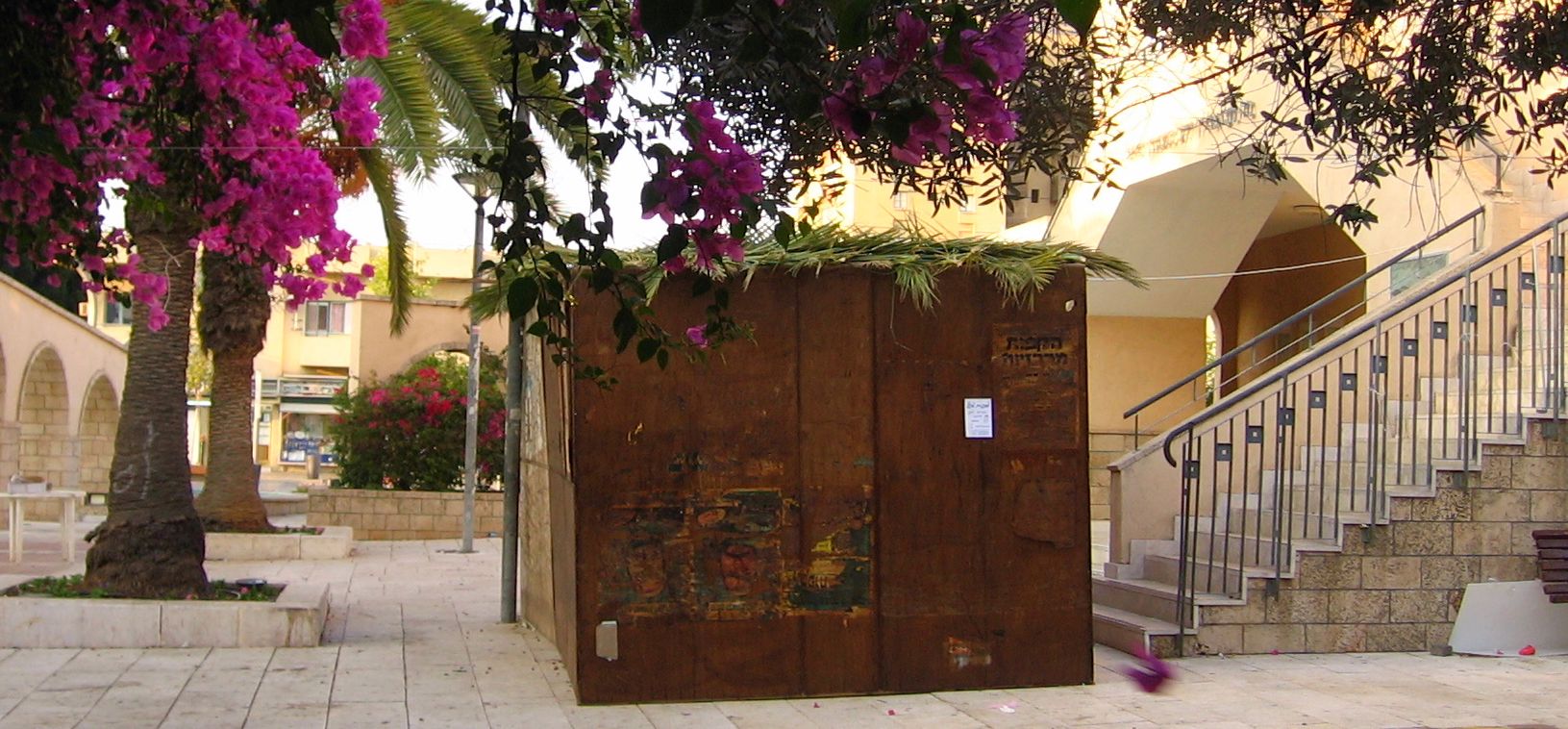
Besides the many requirements of Sukkos, including dwelling in a Sukkah and taking the four species, there is definitely an attitudinal expectation as well, to be only SOMAYACH! There are long instruction manuals on building a proper Sukkah and on choosing each of the four designated species so that we fulfill the Torah requirements, yet SIMCHA on Yom Tov gets a shorter treatment, but not because it is less important.
It is very subjective. Each person is different and what makes one person feel happy does not tickle the fancy of another. We need to know ourselves and monitor our own inner world to make it real. It may help to give some definitions and boundaries about what exactly this mindset includes.
The Ramchal writes in the Mesilas Yesharim about the essence of SIMCHA, “JOY: The second branch of love of G-d is joy, it is a great, essential principle in serving G-d. This is what David exhorted us saying: “Serve G-d with joy, come before Him with song” (Tehillim 100:2), and “the righteous will rejoice, they will exult before God and delight with joy” (Tehillim 68:4).
Rabbi Abahu says: ‘when you stand to pray, your heart should rejoice, for you are praying to the Almighty of whom there is none like Him'”. For this is the true joy, namely, that a person’s heart delights that he merits to serve before the blessed Master, of whom there is none like Him, and to toil in His Torah and His Mitzvot which are the true perfection and the eternal worth.
And Shlomo said in a parable on wisdom: “Draw me, we will run after You. The King has brought me into His chambers; we will be glad and rejoice in You” (Shir HaShirim 1:4). For the further a person merits to enter into the inner chambers of knowledge of His blessed greatness, the more his joy will increase and his heart will sing within him…”
Let us appreciate that “FUN” is not the same as “SIMCHA”. What is the difference? Let us say that you are on your way to Israel and every moment in the airplane you are inching closer to your heart’s destination. However, you find yourself in a middle seat between two customers who are making your life miserable. If we freeze any frame along the way, and ask you, “Are you having fun now?” The answer will be an emphatic, “NO!” Can it be, however, that you are experiencing sublime joy deep in your heart? The answer can certainly be, “YES!” How so?
For certain, the situation now is woefully unpleasant but, at the same time you are getting closer to your goal. Rav Hirsch relates the word for joy, “SOMAYACH” to “TZAMEACH” which means to grow. As we make progress in life and achieve for ourselves and others, our measure of joy increases.
The sweet feeling of accomplishment is often accompanied by struggle and the need to exit our comfort zone. Simcha is the feeling of actualizing potential and becoming ourselves. The heart longs to bring our authentic selves even closer to HASHEM, as King David writes, “As for me, being close to HASHEM is for me the real good.”, and so too it is the source of JOY!