


As we read the Book of Genesis, we are spellbound by a rapid succession of sharp and vivid images that leave deep and lasting impressions. The Creation, the Flood, Abraham’s departure from home, the angels bearing tidings of the birth of Isaac, the destruction of Sodom, Abraham’s willingness to sacrifice Isaac, the conflict between Jacob and Esau, the rivalry between Joseph and his brothers and many others pass before us, each sketched in bold strokes in a small number of verses and laden with endless moral and spiritual significance.
In this week’s parshah, however, we find a relatively extensive account of Abraham’s negotiations for the purchase of the Cave of the Machpelah in Hebron as a burial ground following the death of Sarah. Why did Abraham go to such great lengths to acquire this particular piece of land? And what is so significant about the acquisition of the Cave of the Machpelah that the Torah focuses upon it in such great detail?
Furthermore, the Midrash tells us that Abraham eulogized Sarah by using each verse of the Woman of Valor (Proverbs 31) to describe another of her virtues. How did the phrase “she planned the purchase of a field and acquired it” apply to Sarah? The Midrash explains that this referred to her acquiring a permanent resting place in the Cave of the Machpelah. But how can this be? The Cave was acquired by Abraham, not by Sarah – and only after her death.
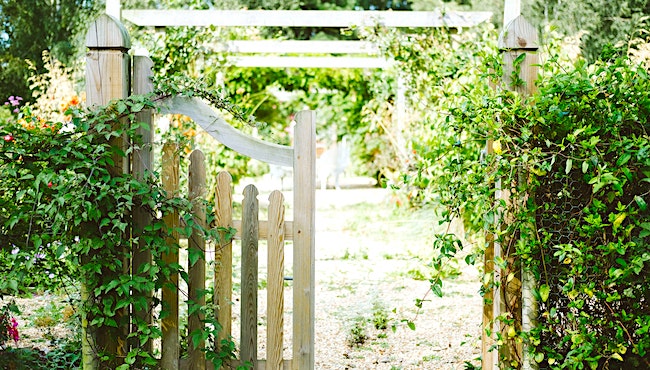
The Zohar writes that the Cave is “the very entranceway to the Garden of Eden.” The Hebrew word machpelah means twofold. The Cave is considered “twofold,” because it bridges the material and spiritual worlds, linking them by serving as an entrance from one to the other. The name of the city in which the Cave is situated, Hebron, also bears the etymological roots of “connection.”
The Cave, as the point of fusion between Heaven and earth, was the proper resting place for the Patriarchs and Matriarchs, whose lives were the perfect bridges between the two worlds – involvement in the mundane affairs of this world without ever losing sight of the spiritual goals and aspirations that infused their lives with meaning and direction. This was how Sarah had “acquired” the Cave. She had lived her life as the paragon of an intelligent and thoroughly spiritual woman of the world, never compromising her purity, modesty or righteousness. Such a woman deserved to find her final resting place at the Gateway to Eden.
We are all “twofold” creatures. We have our spiritual sides and our material sides, and we have to forge a beneficial union between the two. We must give the full deserved attention to those daily activities that put bread on our tables and roofs over our heads. We must take our children to the doctor, and we must fix the transmission on the car. But we must also be intensely spiritual, treating our fellow men with love, kindness and compassion and seeking closer ties with the Creator. How do we reconcile these two worlds? How do we open a gateway from one to the other?
The truth is, we don’t need to. The gateway already exists. It is called the Torah. If we establish the Torah squarely in the center of our lives, right between the two conflicting worlds we represent, we will find a perfect harmony such as we never thought possible. Text Copyright © 2007 by Rabbi Naftali Reich and Torah.org.
Rabbi Reich is on the faculty of the Ohr Somayach Tanebaum Education Center.