

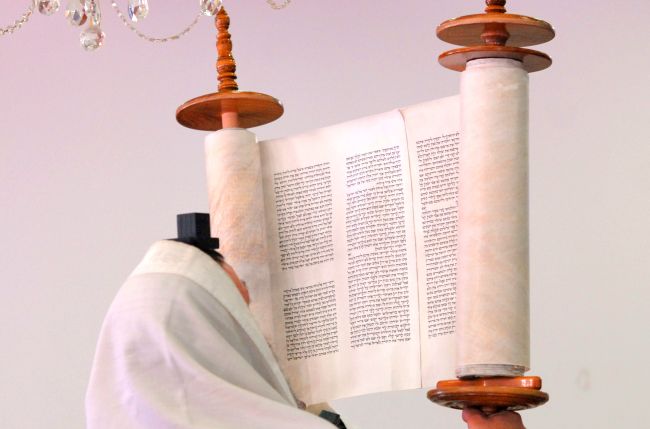
Note: The Shabbos Torah Reading is divided into 7 sections. Each section is called an Aliya [literally: Go up] since for each Aliya, one person “goes up” to make a bracha [blessing] on the Torah Reading.
1st & 2nd Aliyot: The Parsha begins on Nissan 1, 2449. The seven-day inauguration of Aharon and his sons was completed and the ceremonies for the Mizbeach’s consecration had begun. Over 40 offerings would be brought on that first day, each requiring the direct ministrations of Aharon. Aharon blessed the nation with the standard priestly blessing after which Moshe and Aharon blessed the nation with the special Bracha of Psalm 90.
3rd Aliya: The deaths of Nadav and Avihu are recorded at the very same time that fire descended from heaven to light the Mizbeach. Their cousins removed the bodies of Nadav and Avihu from the courtyard of the Mishkan. Moshe instructs Aharon and his two remaining sons, Elazar and Isamar, that they are forbidden to overtly mourn the deaths of Nadav and Avihu in the standard manner. It is from here that we are taught the standard practices of tearing Kriyah and of mourners not cutting their hair.
4th & 5th Aliyot: Moshe instructs Aharon and his sons to continue the service of the Mizbeach’s consecration. The first recorded difference in Halachik rulings is recorded between Moshe and Aharon as it pertained to the eating of the Rosh Chodesh offering. (Note 16-20, Stone Edition ArtScroll pg. 595)
6th Aliya: The basic laws of Kosher and non-Kosher animals, fish, and fowl are recorded. Note that verses 11:4-7 is one of the established proofs for the divine authorship of the Torah.
7th Aliya: The basic laws of purity and impurity are recorded. It is important to clarify that the Torah does not associate “Tummah” impurity and “Taharah” purity with good and bad. The entire process involves the concept of life and death and the symbolic emphasis that the Torah places on serving G-d with optimism and vigor. So long as there is life there is the opportunity to grow in our relationship with G-d.
The question of “Why are we commanded to keep Kosher?” is answered in 11:44-47. The Torah clearly states that the reason to keep Kosher is to emulate G-d’s sanctity. Sanctity “Kedusha” means being set apart and different. Just as G-d is apart from all things and divine in every way, so too are we to be set apart from all other nations and be different in the manner of our eating.