

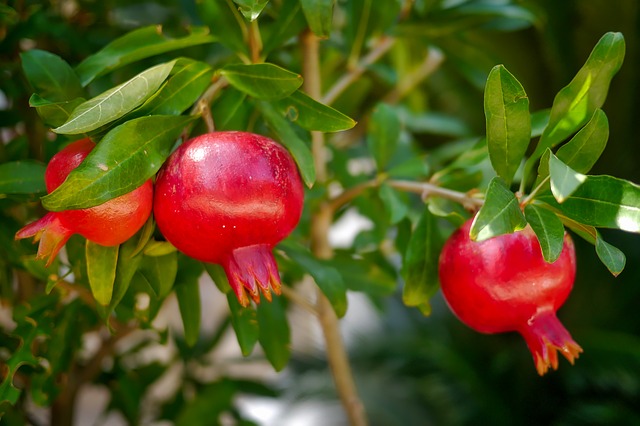

And it will be, when you come into the land which HASHEM, your G-d, gives you for an inheritance, and you possess it and settle in it, that you shall take (M’REISHIS) of the first fruit of the ground, which you will bring from your land, which HASHEM, your G-d, is giving you… (Devarim 26:1-2)
(M’REISHIS) of the first fruit: A man goes down into his field and sees a fig that has ripened. He winds a reed around it for a sign and declares: “This is the first fruit (בִּכּוּרִים).” – Rashi
This first fruit is called by an important name, “REISHIS”. That superior designation is calling out for greater recognition. Why is it applied here? It’s a simple farmer meeting the first fruits. Where does this appellation, “REISHIS” come from?
The opening words of the Torah are too often misunderstood, “In the beginning G-d created the heavens and the earth.” That statement might imply that the Torah is a cosmology textbook interested in satisfying our curiosity about the order of creation.
Rashi relates that the Torah is rather a teaching book with important lessons to be learned. The first letter “Beis” taken as a prefix, meaning “for” or “for the sake of” when attached to the word “REISHIS” means that the world was created for the sake of something called, “REISHIS”. Using the rest of Torah as a self-referential dictionary identifies a few items with the title, “REISHIS”. It is for their sake, all is created. This is not “how” but rather “why” the world was created.
There’s a power to REISHIS! It is the seed idea. Everything that would unfold in the creation was coded in that first complete word, “BREISHIS”. It is the beginning of something grand, the first giant ideal, packed with potential. In Lecha Dodi we say that Shabbos is the last action but the first in thought. Everything begins in the mind and flows into reality from thought, to speech, to action.
The shoes you are wearing and the car you drive are a product of design. Someone had an idea, a thought about how it could be and there were conversations, to translate that concept into a concrete reality. The final product, the last action, resembles the original thought. So, is the world created with pure purpose.
Dovid HaMelech tells us, “REISHIS CHOCHMAH YIRAS HASHEM” – “The primary wisdom is to realize HASHEM!” The world was created for man to graduate to this highly valued form of wisdom. What is there about this first fruit that earns it earns the grandiose title REISHIS? Actually, the term in the Torah is M’REISHIS or literally “FROM REISHIS”.
The Talmud finds a contradiction between two verses uttered by Dovid HaMelech. On the one hand he says, “The heavens are the heavens of HASHEM and the earth is given to mankind”. He also states these words, “The earth is HASHEM’s and its fullness”. So, according to Dovid, what is the story with the earth? Is it the domain of man or does everything belong to HASHEM? How do we reconcile this apparent conflict? The Talmud answers that it is not a problem, because one is talking about before a Brocho while the other is referring to after a Brocho!
The standard explanation is that before making a Brocho, everything belongs to HASHEM. It’s like being in a store. Everything belongs to the store owner until you pass the cashier and pay. Making a Brocho equals paying. Then it becomes “yours”.
I heard of an explanation that points out that the Talmud does not explicitly explain which verse applies to before and which to after the blessing. Accordingly, it can be understood that before a Brocho, it is an ordinary, for example fig, in the possession of a human, however, after the Brocho, it becomes a HEAVENLY FIG. Now, that it is related back to or “from” its HOLY source, it is infused with the power of REISHIS.