



These divrei Torah were adapted from the hashkafa portion of Rabbi Yissocher Frand’s Commuter Chavrusah Series on the weekly portion: #1434 – Yizkor on Yom Tov – Why?; In the First Year? And Other Yizkor Issues. Good Shabbos
Towards the end of Parshas Shoftim, Klal Yisrael goes to war. The “kohen mashuach milchama” (anointed for war) gives them a schmooze (“charge”) to emotionally and spiritually strengthen them: “When you go out to the battle against your enemy, and you see horse and chariot — a people more numerous than you, you shall not fear them, for Hashem your G-d is with you, who brought you up from the land of Egypt. It shall be that when you draw near to the war, the kohen shall approach and speak to the people. He shall say to them, “Shema Yisrael (Hear, O Israel) you are coming near to the battle against your enemies; let your heart not be faint; do not be afraid, do not panic, and do not be broken before them.” (Devorim 20:1-3).
The pasuk here curiously uses the expression “Shema Yisrael.” Rashi, quoting the Sifrei and a Gemara (Sotah 42a) adds: “Even if you have no merit other than the mitzva of reciting Krias Shema alone, you are worthy enough that He shall save you.”
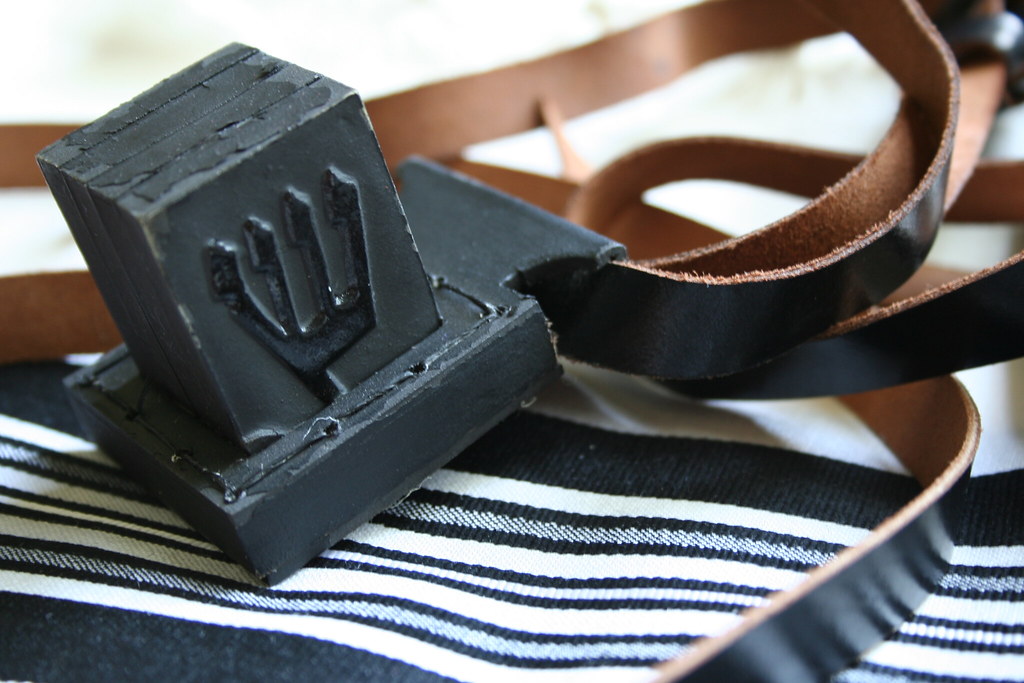
I saw a question cited in the name of the Gerer Rebbe, zt”l, (the Beis Yisrael) which seems to be obvious: The Torah specified certain exemptions from battlefield combat. One of those exemptions is “…who is the man who is fearful and of soft heart, he shall go and return home and not melt the heart of his brethren like his heart.” (Devorim 20:8). There is a machlokes Tanaim (Sotah 44a) regarding to what this expression “of soft heart” is referring. One opinion is that it is to be interpreted literally to mean he is afraid of battle. Rav Yosi HaGlili, however, argues and says it refers to someone who is afraid of the aveiros (sins) he has committed. According to Rav Yosi HaGlili, a soldier who is afraid of the aveiros that he has hiding in his closet is exempt from war. As an example of an aveira (sin) that a person needs to be worried about at the time of battle, the Gemara cites someone who speaks between the time he put on his Tefillin shel Yad (hand Tefillin) and his Tefillin shel Rosh (head Tefillin). (Speech interruption at that time is forbidden by halacha.)
If you think about it, these two Gemaras contradict one another. On the one hand, the Gemara says that any soldier that merely has the basic mitzva of Krias Shema to his credit is guaranteed safety. On the other hand, the Gemara says that even violation of the relatively minor aveira of speaking between putting on the Tefillin shel Yad and Tefillin shel Rosh is enough to justify fear of falling in battle. How are these two Gemaras to be reconciled?
Before going further, I want to present a very important psychological insight that will help answer our question.
The Gemara (Nedarim 40a) says, “whoever does not visit the sick, it is as if he has murdered the person.” What does that mean? The simple understanding is that someone who is not mevaker choleh, and therefore does not daven for the person, causes the death of the sick person. “Had you davened for him, you could have perhaps invoked the mercy of Heaven and caused the person’s life to be spared.” However, the Netziv in the Meromei Sadeh quotes a mind-boggling Sheiltos in Maseches Nedarim, with a different understanding of this Gemara. Namely, whoever does not visit a sick person in the hospital, it is as if he davened that the sick person should die!
Why would someone be motivated to daven that the fellow should die? The answer is that he is embarrassed that should the sick person get well he may meet him in shul and need to explain why he didn’t visit him in the hospital. It will be uncomfortable and even embarrassing to meet the sick person after his recovery, with no good excuse for not having come to visit him during his illness. Therefore, psychologically, the person is davening that the sick person not get better, but rather expire, so that he can avoid meeting him again.
We see from this Sheiltos that people hate to own up to their mistakes. It is too painful for them to admit to the fact that they were wrong or negligent. Rather than going up to the fellow and apologizing for not visiting him during his illness, rather than needing to say “I’m sorry,” a person davens that the choleh should die so that he will never need to see him again!
Now listen to another Sifrei. The Sifrei says on the pasuk “For a bribe will blind the eyes of the wise…” (Shemos 23:8) that a judge who takes a bribe does not leave this world until he argues “tzedek” regarding his ruling.” Rabbi Buchspan brings a dayan from Pressburg who gives a phenomenal interpretation of this Sifre: Someone who takes a bribe to pasken incorrectly will, for the rest of his life, create “lomdus” to justify his incorrect ruling. In other words, when two fellows come before a dayan and present their arguments, the dayan knows the halacha. He knows that Reuven is chayav (obligated) and Shimon is patur (exempt). But when Reuven slips the dayan $100, the dayan is able to come up with some bogus Talmudic logic to conclude that Reuven is patur and Shimon is chayav.
He did something wrong. He took the money. He should go to the person he cheated, apologize, and make restitution for the loss. At the very least, he should klap al chet on Yom Kippur to confess his aveira for taking the bribe. But that is not what he does. Rather, for the rest of his life he carefully goes through the Talmudic details of the case he ruled upon and comes up with phony interpretations of the sugya to justify his erroneous psak. He does all this because he refuses to say “I was bought.” Rather than come to grips with that, he convinces himself and tries to convince others of a false interpretation of the underlying halachic source material.
As we see, then, (1) a person would rather his friend die than face the humiliation of not having visited him, and (2) a person is willing to rationalize his corrupt psak to allow him to sleep at night despite having illegally ruled in favor of a guilty party, rather than owning up and confessing that he took a bribe.
Based on this, the Beis Yisrael interprets Rav Yosi HaGlili’s opinion (that a soldier returns due to the fear of his aveiros) as follows: The soldier returns from battle due to the “aveiros she’b’yado” (aveiros he has in his hand). This means that the person committed an aveira, but that aveira is still “in his hands” i.e. – he refuses yet to admit that it is an aveira! The Beis Yisrael equates this with the famous Gemara that states that if someone is “tovel v’sheretz b’yado” (immerses with a dead creature in his hand), such immersion does not help because while going to the mikva, he is still holding on to the very item which has contaminated him.
The answer to the aforementioned contradiction is that if a person has repented from the aveiros he has committed, then even if he only has the zechus (merit) of reciting Krias Shema, he will be saved in battle. However, if he persists in justifying his previous misdeeds without remorse – without confessing his shortcomings – that is still “aveira she’b’yado.” The aveira is still present in his hand. For such aveiros that are still in his hand, the zechus of Krias Shema is not enough to save him, even from a supposedly relatively minor aveira, so he indeed has reason to fear his fate in war, which justifies returning from battle, according to Rav Yosi HaGlili.
Transcribed by David Twersky; Jerusalem [email protected]
Edited by Dovid Hoffman; Baltimore, MD [email protected]
This week’s write-up is adapted from the hashkafa portion of Rabbi Yissochar Frand’s Commuter Chavrusah Series on the weekly Torah portion. A listing of the halachic portions for Parshas Shoftim is provided below:
- 019 – Copying Cassette Tapes
- 109 – Hasogas G’vul: Infringing on Another’s Livelihood
- 155 – Ba’al Tashchis: Cutting Down That Troublesome Tree
- 202 – Melech v’lo Malkah: A Jewish Queen?
- 249 – May A Daughter Say Kaddish?
- 338 – Relying on a Goral
- 383 – Circumstantial Evidence
- 426 – The Mitzvah of Escorting Guests
- 470 – May a Convict Escape?
- 514 – Can a Ger Be a Rosh Yeshiva?
- 558 – Competition Among Teachers
- 602 – Saying Kaddish for 12 Months
- 646 – Cutting Branches of Fruit Trees
- 690 – The Grandson and Kaddish
- 734 – Making a Bracha on a New House
- 778 – “I’m Bar Mitzvah” – Do We Believe Him?
- 822 – Making a Chanukas Habayis for a New Home
- 866 – Saying Yizkor During the First Year
- 910 – Business Competition Asur or Mutar
- 954 – Visiting The Sphinx in Egypt−Is It Permitted?
- 997 – Finding Out The Future: Mutar or Asur?
- 1041 – Finding Out If “It” is a Boy or Girl? A Good Idea?
- 1085 – Killing Innocent Civilians During Times of War
- 1128 – Getting Undeserved Kavod – How Honest Must You Be?
- 1170 – The Electric Blanket and the Power of Chachomim in Our Days
- 1214 – The Danger of Cutting Down a Fruit Tree
- 1258 – Brachos on the Tefillin – One or Two Brachos?
- 1302 – Cutting Down Your Fruit Tree for Your S’chach
- 1346 – Minhag Yisroel Torah: The Power of Minhag
- 1390 – Saying VaYechulu Friday Night in Shul
- 1434 – Yizkor on Yom Tov – Why?; In the First Year? And Other Yizkor Issues
- 1478 – Can Women Be Told Not to Come to Shul to Make More Space for Men During Covid?
- 1522 – Can You Say Kaddish for More Than One Person at the Same Time?
- 1564 – Is Magic Kishuf or Just Sleight of Hand?
- 1604 – Baal Tashchis – Exceptions to the Issur
A complete catalogue can be ordered from the Yad Yechiel Institute, PO Box 511, Owings Mills MD 21117-0511. Call (410) 358-0416 or e-mail [email protected] or visit http://www.yadyechiel.org/ for further information.