


This dvar Torah was adapted from the hashkafa portion of Rabbi Yissocher Frand’s Commuter Chavrusah Series on Parshas Lech Lecha: #1486 – Quantity vs. Quality What Wins? Good Shabbos!
I want to begin with a very interesting ha’arah (insight) on a very famous Gemara in Masechta Taanis 21a. The famous Tanna, Nachum Ish Gamzu, was called by that name because he always said “Gam zu l’tova” (This, also, is for the good). Nachum Ish Gamzu was Rabbi Akiva’s rebbe. When Rabbi Akiva said “Kol ma de’avid rachmana letav avid” (Whatever Hashem does is ultimately for the good), he got that from his rebbe, Nachum Ish Gamzu.
One time, the Jews were in sakana (danger) and they needed to send a present to the Caesar (the king). They decided that the best person to bring the present to the Caesar was Nachum Ish Gamzu, because nissim (miracles) were always happening to him. They gave Nachum Ish Gamzu a chest of avanim tovos umargalyos (precious stones and pearls) to give as a present to the Caesar.
Nachum Ish Gamzu went, and on the way, he stayed at an inn overnight. The unscrupulous group of hotel owners looked inside the chest while Nachum Ish Gamzu was sleeping. They saw that it was full of avanim tovos umargalyos. They removed the avanim tovos umargalyos and they put in afar (dirt) instead. In the morning, Nachum Ish Gamzu continued his mission, unaware of the switch.
After the present was delivered, the Caesar opened the chest and, lo and behold, what he always wanted, a chest full of dirt! The Caesar thought that the Jews were making fun of him. This is the present you give the Caesar? They were about to kill Nachum Ish Gamzu, when Eliyahu Hanavi suddenly appeared, looking like a member of the king’s court, of his royal entourage. Eliyahu said “Wait, not so quick. Maybe this isn’t regular dirt. Maybe this is the same afar that their patriarch Avraham used in battle, in which he threw a handful of dirt and it became spears and arrows.”
The Caesar had one country with which he was in constant battle and war. He couldn’t overcome them. The Caesar said, “Go to battle with that country. Use this afar.” They went to battle, the dirt turned into spears and arrows, and they were able to conquer the country. As a reward, the king filled the chest again with avanim tovos umargalyos and gave Nachum Ish Gamzu a grand exit.
Nachum Ish Gamzu stopped off on the way home at the same inn, with the same chest, now refilled again with avanim tovos umargalyos, escorted by a brass band. The innkeepers asked him what happened. He explained that he gave them the afar, and the Caesar was very appreciative. Nachum Ish Gamzu didn’t bother telling them the rest of the story.
The innkeepers said, hey, let’s try this ourselves. They filled up a chest with afar. They came to the Caesar and told him that the dirt the Jew gave him was from their field. “This is our dirt.” The Caesar tries it. Lo and behold, it’s just plain dirt and he kills the innkeepers. Beautiful story.
Rabbi Avraham Buchspan sent me an interesting ha’arah from the Ostrovtzer Rebbe, who was among the gedolei rabbonim and admorim in pre-war Europe. As a matter of fact, someone told me that Rav Elyashiv had a picture of the Ostrovtzer Rebbe in his sukkah. That means the Ostrovtzer Rebbe was mekubal (accepted) not only by chasidim but by misnagdim as well.
The Ostrovtzer Rebbe asks, first of all by Avraham Avinu, the Ribbono Shel Olam has many ways of defeating armies. We see this throughout Jewish history: Sancheirev’s army all died. We saw what happened to the Mitzriyim. Why come up with this idea of afar, that throwing afar turns it into bows and arrows and spears? Why did the Ribbono Shel Olam specifically use afar to help Avraham Avinu in this battle? There are many much more conventional ways to have done it.
The Ostrovtzer Rebbe says that this is an example of midda k’neged midda (measure for measure), as follows: Successful people, and even not-so-successful people, if they are even somewhat successful, they naturally attribute their success to “Kochi ve’otzem yadi asa li et hachayil hazeh” (My own strength and the power of my hand have produced for me this wealth or success). This is one of the big nisyonos (tests) of life.
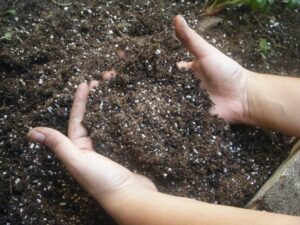
If you are successful in whatever you may do, you may think it’s because you are smart. “I’m talented. I’m personable, etc.” Everyone needs to know that it has nothing to do with you. It is not kochi ve’otzem yadi, because we are all nothing but afar ve’eifer. We are just dirt. That’s what we are.
Adam yesodo me’afar vesofo le’afar (A person’s origin is from dust, and his end is to dust). It is a constant nisayon (test) to not let it get to your head. People always need to realize that we are afar. Without the Ribbono Shel Olam, we are literally powerless and can’t do a thing. It is very hard for us to come to grips with that, but that is the reality.
For Avraham Avinu, who truly believed and didn’t merely preach, it was not just lip service. Avraham Avinu, who said anochi afar ve’eifer (I am dust and ashes), realized that without the Ribbono Shel Olam, as successful and as great as he was, at the end of the day, adam yesodo me’afar. Avraham understood, believed, and practiced this, so when it came to making a nes (miracle) for Avraham, what did the Ribbono Shel Olam use? He used afar because Avraham Avinu actually believed that he is only afar and that Ein od milvado (There is nothing else besides Him). If the Ribbono Shel Olam wants, He can turn afar into a weapon, and if He doesn’t want, the greatest army in the world won’t be successful. The midda k’neged midda over here is that the Ribbono Shel Olam is emphasizing to Avraham Avinu that this is your schar (reward) for believing and for preaching and living anochi afar ve’eifer. I am going to show you that I can turn afar into a weapon, just like I can make you into a successful human being, even though you are only afar.
The Ostrovtzer Rebbe said that is why Nachum Ish Gamzu received the same reward. When a person constantly says gam zu letova no matter what happens in life, what is he in effect saying? He is saying that everything is in the Ribbono Shel Olam’s hands. I can do nothing. This is what He wants. Gam zu letova, this must be good because this what He wants. Gam zu letova is based on this concept that I, by myself, have no kochos (powers) whatsoever. I am just afar ve’eifer. When a person realizes that and lives like that, he can say gam zu letova.
Perhaps we can connect this to an interesting Gemara and Nefesh Hachayim. The Gemara in Chullin 7b teaches that Ein od milvado is something that we need to constantly think and say and try to make real. Ein od milvado. Without the Ribbono Shel Olam, we are powerless, we can have no hatzlacha (success), and we can’t even take a breath. Rabi Chanina adds “and even kishafim” (magic). Ein od milvado. There is no force in this world other than the Ribbono Shel Olam. He’s the be-all, he’s omnipotent, he’s omniscient. He’s all of these things.
What does Rabi Chanina mean by “even kishafim.” In earlier times, kishuf was a real koach (power). This is not some character on Sunrise Highway who claims that he can read palms. This was real magic. It was a koach.
Rabi Chanina demonstrated the meaning of “Ein od milvado and even kishafim.” The Gemara says that there was a machshefa, a woman who practiced witchcraft. She wanted to get the dirt on which Rabi Chanina stepped. Why? Because this way she would have some kind of connection with Rabi Chanina and therefore, she could use her magical powers to curse Rabi Chanina. Rabi Chanina sees that this woman is trying to get the dirt. He says that she should take the dirt. “It doesn’t bother me. She is not going to be successful.” Why? Because Ein od milvado. Because there’s no power other than the Ribono shel Olam.
The Gemara asks, Rabbi Yochanan says that kishuf does have koach and kavyachol they make the pamalyah shel ma’alah, the heavenly court, weak. The answer is that Rabi Chanina is different because he has a lot of zechusim (merits).
Kishuf is a koach to many people, but not to Rabi Chanina. This is a little beyond our, or at least my, hassagos, but the Nefesh Hachaim, Rav Chaim Volozhiner, in Shaar 3, Perek 12, writes that the Ribono shel Olam did give a koach to kishafim. At least in earlier times, He did give kishuf a supernatural power, but of course only to the extent that the Ribono shel Olam granted. And anyone who truly believes Ein od milvado, has nothing to worry about.
Rav Chaim Volozhiner says that when the Gemara says in Maseches Chullin that Rabi Chanina had a lot of zechusim, it does not mean that his Torah was so great. It does not mean that his ma’asim tovim (good deeds) were so great. What does it mean by a lot of zechusim? It means that he believed Ein od milvado with his entire being. If you believe Ein od milvado, kishafim are powerless. That’s why Rabi Chanina didn’t need to worry.
Based on this, we can explain another famous Gemara in Maseches Berachos. The Gemara says on daf 33 that there was a community that had an arud, which was some kind of snake that used to harm people. They asked Rabi Chanina what to do about this snake. Rabi Chanina ben Dosa told them to show him its den, its hole. He put his foot over the snake hole, the snake came and bit him, and guess what? The snake died.
Why? How could Rabi Chanina ben Dosa do that? Because Ein od milvado, therefore, there is nothing to fear. If the Ribono shel Olam wants me to live, I will live.
Don’t try this at home because we’re not on that madreiga (level), but Rabi Chanina ben Dosa was on that madreiga. Many of you may know that when the Brisker Rav and his sons were escaping from Europe, and they got to a point at which there were some Nazi soldiers who wanted to check their papers, the Brisker Rav told his sons to think only one thing: Ein od milvado. That’s what they did. They didn’t panic. They didn’t fall apart. They concentrated on that concept of Ein od milvado and all turned out well. Ein od milvado.
This afternoon, I happened to be driving and listening to the radio. There was an interview with a fellow who’s a doctor and sociologist at Yale University. He just wrote a book about the lasting effects of the coronavirus, what it has changed and what it will change, and how society will change. The book is called Arrows of Apollo or something like that.
Be that as it may, one of the things that the author wrote is that during the coronavirus, religiosity is up. People are becoming more religious, which really is just a manifestation of the old principle that there are no atheists in a foxhole.
Does this mean that people are going to permanently become more religious? Probably not. But if even the secular world recognizes that people have no one upon whom to rely except our Father in heaven, how much more so, we, who have the Ribono Shel Olam as so much a part of our lives…
Most doctors, when asked about Corona, will tell you, “I don’t know.“ The truth of the matter is, no one knows.
As we’ve spoken about many a time, the Ribono Shel Olam, is emphasizing to us Ein od milvado. There’s no force, there’s no koach, and there’s no chochma (wisdom) other than the Ribono Shel Olam. It is so easy to slip back into our old ways, but we really, really need to think about what the Ribono Shel Olam is doing to us. The Ribono Shel Olam is demonstrating beyond any shadow of a doubt that He’s the one who runs this world.
Dovid Hoffman; Baltimore, Maryland; [email protected]; Editor
David Twersky; Jerusalem; Editor Emeritus
This week’s write-up is adapted from the hashkafa portion of Rabbi Yissochar Frand’s Commuter Chavrusah Series on the weekly Torah portion. View a full listing of the halachic portions for Parshas Lech Lecha.
A complete catalogue can be ordered from the Yad Yechiel Institute, PO Box 511, Owings Mills MD 21117-0511. Call (410) 358-0416 or e-mail [email protected] or visit http://www.yadyechiel.org/ for further information.