

When Moshe and Aharon threaten the plague of locusts at the beginning of our reading, Paro’s advisors tell him that he truly must let them go, asking rhetorically, “do you not realize that Egypt is lost?” [Ex. 10:7].
Paro then brings Moshe and Aharon back, but asks them who will be going out into the desert to worship. They respond, “with our youth and with our elders we will go,” meaning everyone, of every age. Paro refuses, but only because of the children. He responds: “It will truly be that Hashem is with you, when I send you out and the little children; see that evil is before you. Not so, the adults should please go and serve Hashem, because that is what you are asking for” [10:10-11]. And with that, Moshe and Aharon were pushed out from before Paro, to bring down the plague of locusts.
Why was Paro so incensed at the idea that the children would go along, that he was willing to risk another plague? He was convinced to let the Jews go until he learned that one detail. And then he reversed course. Why?
Paro intended to get rid of all the Jews, through enslavement and killing their baby boys. He knew that simply allowing the Jewish children to see the parents worship Hashem would educate them in how to pray and follow Him.
In other words, Paro knew that the education children receive, especially when guided by their parents, sets them on a particular path for life. And that was what he wanted to prevent.
This is why, throughout years of exile and up to the present day, Jewish education has been seen as critical for preservation of the Jewish nation. The best thing we can give our children is a Jewish future, and that begins with the foundations of Jewish schooling. Even Paro knew how valuable Jewish education is to Jews!
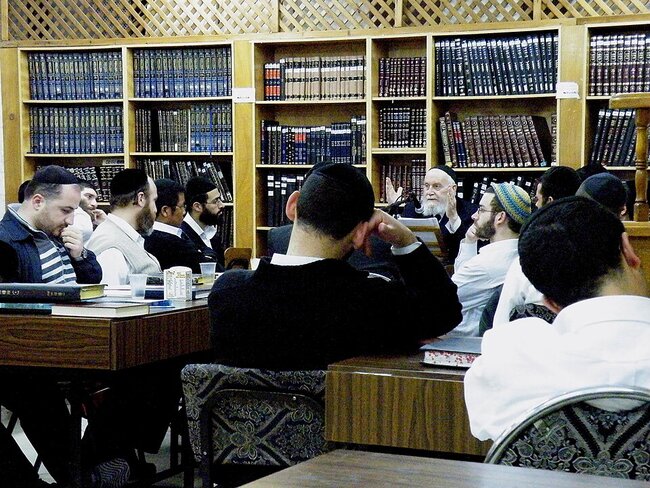
Photo Credit: Rabbinical School, Jerusalem, by Roy Lindman with CC BY-SA 3.0 license, on Wikimedia Commons.
