


Hashem said to him, “Your name is Yaakov. Your name shall not be called Yaakov anymore, for Yisrael is your name.[2]
Confusing, at best. Yaakov is his name – or is not his name?
This was not the first name-change we find in Chumash. Yaakov’s grandfather also underwent the process, moving from Avram to Avraham.[3] There, Chazal insist[4] that the transformation was utter and complete. They even opine that calling Avraham by his previous name is an aveirah. Not so, they say, regarding Yaakov. Since Hashem Himself called him Yaakov subsequent to the change[5], we have to look at our pasuk in that light. It must be telling us that while Yaakov will continue to bear that name, he will not always be referred to that way. Often, he will be called Yisrael.
Different meforshim[6] have somewhat divergent explanations for when each name is used. Roughly, the name Yaakov shows up when dealing with his personal needs, or when referring to him during periods of diminished spiritual strength. When speaking about the nation that would emerge from him, or from the person in times of greater spiritual or psychological strength, the Torah uses the name Yisrael.
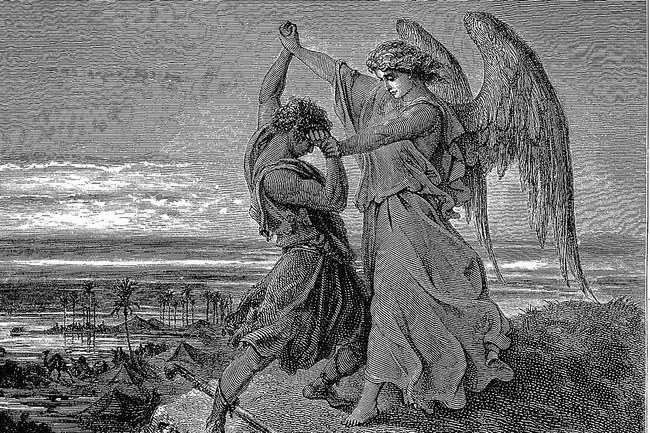
Fair enough. Yet one name-reference continues to puzzle us. When Yaakov cannot be vanquished in a night of struggle with an angel, the angel is forced to bless him. “No longer will it be said that your name is Yaakov, but Yisrael. For you have striven with the Divine and with man, and have overcome.”[7] Why does HKBH insist on occasion on calling him Yaakov, while the angel bears the original news that he was being given the new, honorable name of Yisrael? Especially when we consider that the angel was no great friend of his! It was Esav’s angel – the infamous Soton/ yetzer hora/ Angel of Death! Not such a likely source for bearing good news!
The answer might lie precisely with the angel’s identity. When the yetzer hora fails in all attempts at toppling a person of significance, it does not give up. Rather, it changes strategy. It tells the person that he has triumphed. He has risen to a position of spiritual prominence (which is true), never to be brought low again. (The latter is decidedly not true.) It plants seeds of self-importance in the person’s mind, which in time flourish, and bear the bitter fruit of gaavah. That gaavah then becomes the person’s undoing.
This was behind the angel’s graciousness. He tried pumping up Yaakov’s ego. “’Shkoyach on the fight. You’ve proven yourself. You are a kadosh! Who is like you in stature and greatness?” He hoped that this compliment could fester, and turn toxic.
Hashem did the opposite. He gave Yaakov Fatherly advice. “You are great, My son. However, you must always look at yourself as a Yaakov, as an ordinary being. While you are indeed a Yisrael, it will be healthy for you to not dwell upon it, but to look at yourself as something less. This will prevent you from succumbing to gaavah.”
- Adapted from Maharam Schick al HaTorah ↑
- Bereishis 35:10 ↑
- Bereishis 17:5 ↑
- Berachos 13a, according to one opinion ↑
- Bereishis 46:2 ↑
- See Rabbenu Bechaye, Seforno, Ohr Hachaim 47:25 ↑
- Bereishis 32:29 ↑