

Pesach
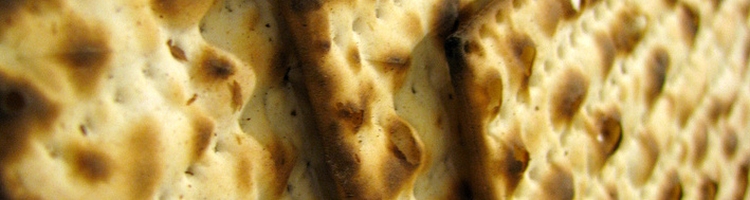
“Ha Lachma Anya… This is the bread of affliction that our forefathers ate in the land of Egypt. All that are wanting should come and eat, all that are needy should come and join in the Pesach offering. Now we are here, next year we should be in the land of Israel. Now we are slaves, next year we should be free men.”
So begins the portion of the Seder known as Maggid, the section in which we relate the story of our enslavement to and exodus from Egypt. We begin our Seder with an invitation and a wish: we invite those who are in need to come celebrate with us, and we wish that next year we should be free to serve G-d in the land of Israel. Rav Baruch Frankel in Margenisa D’Rav writes that the link between the invitation and the wish is actually a cause and effect relationship. The Talmud (Baba Basra 10a) states that “Charity is great, as it brings closer the redemption.” By extending our charitable hand to those who lack the bare necessities to make a proper Pesach celebration, we are bringing close to actualization our living in the land of Israel as free men.
However, giving charity is not an activity confined to the Pesach season. If we are charitable year round, we continuously bring ourselves closer to the end of our exile. Yet, this message has been given a prominent place in the Pesach celebration; it is recited as the very first passage in the Maggid liturgy. The reason for the conspicuous placement of this message is provided by Talmud as well. In further describing attributes of charity, the Talmud states that “all who neglect the commandment of giving charity, it is as if they themselves have worshiped idols.” Benevolence is to be part and parcel of our personalities. Just as G-d is benevolent and giving, so are we to be. If we, instead, are miserly, or merely fail to make an effort to be charitable, it is as if we have denied G-d’s very existence by worshiping idols.
On Pesach, we recall how the nation of Israel, when in Egypt, was commanded to take a sheep to use for the Paschal offering. The sheep was the god of Egypt, an animal that they revered and deified. This action was a clear rejection of the idolatrous practices the nation witnessed during their servitude in Egypt. We were given the commandment to have a Paschal offering every year, to recall our embracing of G-d as the One and Only, and our rejection of idolatry. If, on Pesach, we fail to be charitable, we are in essence regressing to the very state that we rejected while in Egypt. It would be hypocritical to, at one moment, eat a Korbon Pesach or recall one during the recitation of the Hagadah, while simultaneously be a person who neglects his needy brothers and sisters. Either we recall and embrace the rejection of idolatry the Korbon Pesach commemorates and act charitably, or we act without compassion for those in need and reject all that the Korbon Pesach stands for. Because we cannot begin to recite the Hagadah without clearly indicating that we have accepted the dominion of G-d, we must begin by affirmatively demonstrating that we are indeed concerned with the needs of the poor and needy, thereby demonstrating that we have spurned the idolatry that Egypt epitomized. Hence, Ha Lachma Anya needs to be at the beginning of the Maggid liturgy.