

This dvar Torah was adapted from the hashkafa portion of Rabbi Yissocher Frand’s Commuter Chavrusah Series on the Parshas Vayeira: #1487 – Are You Acting Like a Person Who Lived in Sodom? Good Shabbos!
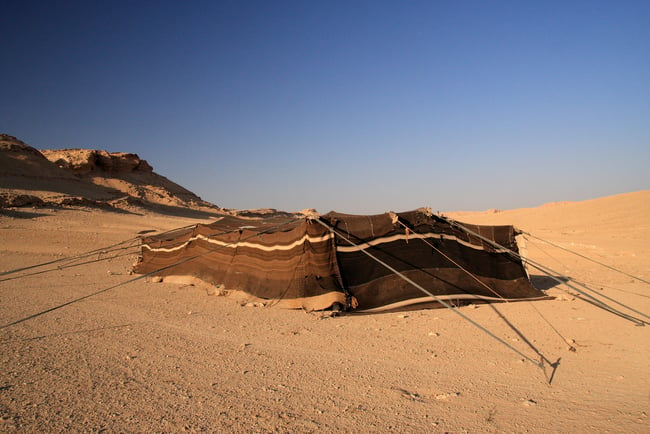
I want to share two interesting ha’aros (insights) on Parshas Vayeira. The first ha’ara is from the pasuk, “Vayeira eilav Hashem be’elonei Mamre ve’hu yoshev pesach ha’ohel ke-chom ha-yom” (Hashem appeared to him in the plains of Mamre, and he was sitting at the entrance of the tent in the heat of the day). Rashi here says that the word “yoshev” implies not just that he was sitting but that he sat down.
The Ribbono shel Olam came to Avraham Avinu. Avraham wanted to stand up. The Ribbono shel Olam told him, “No, sit down, and I, the Ribbono shel Olam, will stand. This will be a sign for your descendants that in the future I will stand in the congregation of judges while they sit, as it says, ‘Elokim nitzav be-adas Kel’ (God stands in the congregation of God). This is a siman (sign) to you that the dayanim (judges) in beis din (rabbinical court) sit, even though the Ribbono shel Olam stands.” How can they do that? The judges sit in the presence of the Ribbono shel Olam? However, this is the paradigm. This is the source. “You sit. I will stand.”
This always bothered me. Why is this a siman for all batei din and dayanim? This seems like a very forced limud. Where is the din (judgement) over here? Where’s the beis din over here? What does this story have to do with beis din or dayanim? Avraham Avinu is a 99-year-old man who is aching from a bris milah. He wants orchim (guests), fine. He’s sitting, good. He is not conducting a beis din!
This year, I saw a very interesting teirutz (answer) to this kasha (difficulty), a ha’ara from Rav Yoshe Ber Soloveitchik, in an email containing Torah from the sefer Nefesh Harav – from Rav Yoshe Ber.
Many of you are familiar with the famous Gemara in Maseches Yoma that we’ve talked about here many times. Three people come to the heavenly court after their deaths: an ani (poor person), an ashir (wealthy person), and a rasha (wicked person). The Ribono Shel Olam says to each of them, “Nu, how much did you learn?”
They ask the ani: “Why did you not engage in Torah? Why didn’t you learn?” He says: “I was poor and preoccupied with earning a living. I had to get up early in the morning and come back late at night. I had no koach. What’s a person supposed to do?” They say to him: Were you poorer than Hillel? Hillel was destitute, as the Gemara says, Hillel Hazaken (Hillel the Elder) used to use, conceptually, one dollar a day. Half of it he would use for his parnasa (livelihood) and half of it he would pay to get into the beis medrash. No one was poorer than Hillel, yet he did not use poverty as an excuse. So, you can’t use poverty as an excuse either.
They ask the ashir: “Did you busy yourself in Torah?” He says: “I was wealthy and preoccupied with my possessions. I was so rich. I had all these properties. I was busy from day until night. I had no time to learn. You need to take care of an empire like that.” They say to him: Were you wealthier than Rabbi Elazar ben Charsom? Then the Gemara details how wealthy Rabbi Elazar ben Charsom was. And he learned so much. So you also need to learn. No time? Wealth is not an excuse not to learn.
Finally, they ask the rasha, who responds that his big yetzer hara (evil inclination) did not let him learn. They say to him: “Were you more handsome than Yosef Hatzaddik?” He had more temptation than you and he wasn’t nichshal (did not stumble) and he learned Torah. You also need to learn.
The Gemara says that Hillel mechayev (obligated) es ha’aniyim (the poor people), Rabbi Elazar ben Charsom mechayev es ha’ashirim (the rich people), and Yosef mechayev es ha’reshaim (the wicked people). That’s the famous Gemara.
This Gemara is limiting the legitimate excuses available for not fulfilling the mitzvah of learning Torah. If it’s a legitimate excuse, then indeed, there’s a concept in halacha called oness rachmana patrei (the Torah exempts one who is genuinely unable). If, in fact, that is the situation, that you truly couldn’t learn, then you will not be held accountable, because oness rachmana patrei.
Based on this, Rav Yoshe Ber asks an interessante kasha (interesting question). The Ribono Shel Olam wants to destroy Sodom. Sodom was a rotten city, sin city, they were all reshaim (wicked people). But a person can say, “What am I supposed to do? The environment in which I found myself was so corrupt, so decadent, so depraved. What do you want from me? Man is a social animal.” A person is influenced by his surroundings. “If I happened to wind up in this city, perhaps not by my choice, and this is what it became, I got sucked in.” So how can the Ribono Shel Olam destroy all the inhabitants? Nonetheless, Gavriel is sent on this mission to destroy all the inhabitants. Why isn’t there a valid excuse of getting sucked into a bad place?
Rav Yoshe Ber says that Avraham Avinu obligates those who were influenced by their environment. Avraham Avinu lived in a society of ovdei avodah zarah (idol worshippers). They were also mushchasim (morally corrupt). The whole world was on one side, and Avraham was on the other side. Yet Avraham survived. He thrived. Not only was he not influenced by his society, he influenced society, as it says, “the souls they made in Charan.”
The Rambam describes how Avraham Avinu was mefarsim (publicized) the sheim (name of) Hashem. His hachnasas orchim (welcoming guests) led to people saying thank you, to which he responded, “Don’t thank me, thank the Ribbono shel Olam.”
So it is clear that people can survive even in a hostile environment. Avraham Avinu negates the tayna (claim), “What do you want from us in Sedom?” That is what it means, atta yoshev ba’din (you sit in judgment). Avraham Avinu wasn’t an active dayan (judge) over here. Avraham Avinu wasn’t sitting with dayanim and paskening dinim (issuing legal rulings). So what did this have to do with din? The answer is that the din over here is the din that was supposed to happen to Sedom. That din could not happen if there existed a valid tayna, “What can a person do so as not to sin in a bad environment?” Avraham Avinu was mechayav those who live in bad environments, which enabled the din to proceed.
In fact, Rav Chatzkel Abramsky, has a ha’ara that ties into this exact idea. What does the pasuk mean: “Va’yakumu mi’sham? ” The men arose from there and they looked towards Sedom and then they went on the mission to destroy Sedom. Obviously, they arose from there. They were there, so where else would they have arisen from? They must leave from there. Why does the pasuk need to say they arose from there?
With Rav Yoshe Ber’s mahalach (approach), it’s beautiful. “Va’yakumu mi’sham va’yashkifu al penei Sedom.” It’s only because they got up misham (from there), because they saw Avraham Avinu. They saw what Avraham Avinu did despite his environment. That gave them the right, or the strength, or the justification to destroy Sedom. They arose from there because just like Hillel is mechayav the poor and Rabbi Elazar ben Charsom is mechayav the wealthy and Yosef is mechayav the wicked, Avraham Avinu is mechayev those people that say “it was because of my society, what am I supposed to do?” That’s the first ha’ara.
Teaching Children to Love Yiddishkeit
The second ha‘ara comes with a short story. The pasuk says, “ki yedativ le’ma’an asher yetzavveh es banav ve’es beiso acharav ve’shamru derech Hashem la’asos tzedakah u’mishpat le’ma’an havi Hashem al Avraham es asher dibber alav” (For I have known him because he will command his children and his household after him to keep the way of Hashem, to perform righteousness and justice, so that Hashem may bring upon Avraham that which He spoke concerning him).
What does this pasuk mean? There’s a machlokes ha‘rishonim (dispute among the early commentators) exactly what the words ki yedativ (for I have known him) means. What does it mean “because I knew Avraham?” Rashi learns that ki yedativ means “I love Avraham Avinu because he will command his children and his household after him, and they will keep the way of Hashem. Avraham Avinu gave over to his descendants the derech (way of) Hashem and that is why I love Avraham Avinu.” This is really a tremendous statement in and of itself. It doesn’t say “I love Avraham Avinu because he passed asara nisyonos (ten tests).” It doesn’t say “I love Avraham Avinu because he was a ba’al chesed” (master of kindness). It doesn’t say “I love Avraham Avinu because he was nimol (circumcised) at age ninety-nine.” It says “I love Avraham Avinu because of his ability and commitment to give over and command to his children and his household after him, and they will keep the way of Hashem.”
Rav Meir Simcha, the Meshech Chochma, in this week’s parsha, says a very interesting thing about this pasuk. The mitzva of educating children is not explicitly mentioned in the Torah. In the entire Torah, there is no mitzvas asei (positive commandment) of chinuch habanim (educating children). Of course, there are very few things to an observant Jew that are more important than chinuch habanim. We give our blood, sweat, and tears for it. But where is it written? Where does it say it in the Torah?
Rav Meir Simcha says that maybe you will suggest “v’limadtem osom es b’nechem” (You shall teach them to your children)? But no, that pasuk refers specifically to Torah study. Maybe you will suggest “chanoch l’naar al pi darko” (train a child according to his way)? But that is a pasuk in Mishlei. It’s not a d’oraisa (Torah commandment). Rav Meir Simcha says that this pasuk of “ki yedativ le‘ma’an asher yetzavveh es banav ve‘es beiso acharav” is the mitzvas asei of chinuch habanim. Now, it’s true that this is not in the minyan hamitzvos (enumeration of the mitzvos), but many chiyuvim (obligations) from the Torah are not mitzvos. This is the makor (source) in the Torah according to the Meshech Chochma.
Reb Berel Povarsky asks that all over Shas, we say that chinuch (education) is d’rabbanan (rabbinic). The question in lamdus (conceptual analysis) is whether the mitzva is on the child or on the father, but chinuch is d’rabbanan. In fact, the Gemara has a whole discussion about whether women are chayav (obligated) in chinuch at all. So why are you telling me that it is a mitzvas asei (positive commandment)?
Reb Berel Povarsky says that there are two types of chinuch. When the Chachomim say that chinuch is a mitzva d’rabbanan, they are talking about the chinuch of a child who is an appropriate age. You should buy him tzitzis (ritual fringes) and be m’chanech (teach) him about mitzvos. You should teach him how to do netilas yadayim (ritual hand washing). You buy him a lulav (palm branch), etc. That is what we mean that chinuch is d’rabbanan. The actual practice of getting a child accustomed to doing mitzvos is d’rabbanan.
But how do you know that you are supposed to give over the mesora (tradition) and the beauty of Yiddishkeit (Judaism), of making a point of inculcating and instilling in your child that there is this thing called Yiddishkeit that is worth living and dying for. From where does that come? We’re not talking about the details of netilas yadayim or other mitzvos. We’re talking about the overall concept of making Yiddishkeit appealing to a child. That, Rav Meir Simcha says, is from this pasuk, and women are also obligated in it. When the Gemara says that women are not chayav in chinuch, it means they don’t need to teach the child how to wear tzitzis or wash netilas yadayim. But we learn about the need to give over the love of Yiddishkeit and the devotion to Yiddishkeit from this pasuk and it is a d’oraisa.
I want to share a story I saw in a sefer that is an interesting example of what it means to make Yiddishkeit appealing to a child, as opposed to making Yiddishkeit unappealing to a child. There was a person in Eretz Yisroel who I never heard of, named Harav Yechiel Yakobson. He was a great mechanech (educator). When he was a little boy, he lived in Bayit Vegan, right across the street from Yeshivas Kol Torah.
Rav Shlomo Zalman Auerbach, the gadol hador (leading Torah sage of the generation), was the rosh yeshiva in Kol Torah. He actually didn’t live in Bayit Vegan. He lived in Shaarei Chesed. Every day, after he said the shiur (Torah lecture), the talmidim (students) would come to ask him questions and then a car would pick him up and drive him to his house.
This little child named Yechiel Yakobson saw this scene every day. He saw all these talmidim standing around Rav Shlomo Zalman, asking him questions. The boy had a dream: “I want to ask a question to Rav Shlomo Zalman.”
One day, this Yechiel saw an opportunity so he said to Rav Shlomo Zalman, “I have a question!” Rav Shlomo Zalman asked, “What is the question?” Yechiel later explained that he always had this dream of asking a question, but he never dreamt of what he would ask. He was on the spot and he got tongue-tied. He didn’t know what to say. So, he remembered a question that he asked in class, for which the rebbe potched (slapped) him across the face. But he was stuck, so somewhat foolishly, he asked that question, despite his prior experience suggesting that it was not the greatest question.
Yechiel said that they learned in class, “Ratzah Hakadosh Baruch Hu lezakos es Yisrael, lefikach hirba lahem Torah umitzvos” (The Holy One, Blessed is He, wanted to grant merit to Israel; therefore, He gave them abundant Torah and mitzvos). Yechiel asked, “If the Ribbono shel Olam wanted to be nice to us, why didn’t He give us less mitzvos? We have so many mitzvos to do, why not less mitzvos? That makes more sense to me. Less mitzvos, not more mitzvos.”
Now I am certainly not condoning the rebbi’s reaction to this question but you can understand why the rebbe didn’t like that question. Rav Shlomo Zalman responded, “That is a very good question. A beautiful question. I will explain it to you. Do you know how you’re supposed to put your shoes on?” Yechiel said, “Yes, we learned that in school. First you put on the right shoe and you don’t tie it. Then you put on the left shoe and you tie it, and then you tie the right shoe.” Rav Shlomo Zalman responded “Very good, that’s exactly what you’re supposed to do.”
Rav Shlomo Zalman said to him, “Let me ask you a question. When a goy (non-Jew) puts on his shoes, is there any seder (order) of how he puts on his shoes? No. But every time a Jew puts on his shoes, he’s mekayeim (fulfilling) a mitzva. And every time a goy puts on his shoes, he is doing nothing. Yet you are going to get sechar le’olam haba (reward in the World to Come) for every time you put on your shoes in the proper way. That is what it means, Ratza Hakadosh Baruch Hu lezakos es Yisrael (Hashem wanted to grant merit to Israel). Every little thing that you do can be mekayeim a mitzva and you can get nitzchiyus (eternal reward) from that.”
Yechiel commented that this remained with him for the rest of his life. “Always remember, we put on shoes and they put on shoes. We put on shoes and receive reward, while they put on shoes and do not receive reward. We tie our shoes and they tie their shoes. We tie our shoes and receive reward, while they tie their shoes and do not receive reward.”
That is a function of ki yedativ, of Avraham commanding his children and his household after him to keep the way of Hashem, and to perform righteousness and justice.
Dovid Hoffman; Baltimore, Maryland; [email protected]; Editor
David Twersky; Jerusalem; Editor Emeritus
This week’s write-up is adapted from the hashkafa portion of Rabbi Yissochar Frand’s Commuter Chavrusah Series on the weekly Torah portion. View a full listing of the halachic portions for Parshas Vayeira.
A complete catalogue can be ordered from the Yad Yechiel Institute, PO Box 511, Owings Mills MD 21117-0511. Call (410) 358-0416 or e-mail [email protected] or visit http://www.yadyechiel.org/ for further information.
Photo Credit: a Bedouin tent in the Syrian Desert, by yeowatzup with CC BY 2.0 license, on Flickr.