


These divrei Torah were adapted from the hashkafa portion of Rabbi Yissocher Frand’s Commuter Chavrusah Tapes on the weekly portion: # 585, The Melacha of Trapping. Good Shabbos!
The Impact of Kedusha
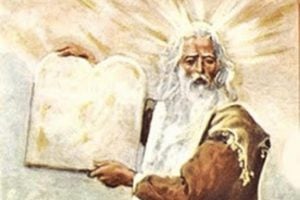
The Parsha begins, “And Moshe assembled the entire assembly of the Children of Israel and said to them…” (Shemos 35:1). Then the topic ends some twenty pesukim later with the words: “The entire assembly of Israel left Moshe’s presence.” (Shemos 35:20) Moshe told them what he needed to tell them and then everyone left.
If this was a Talmudic passage, the Gemara would analyze it, asking, “This is obvious. What is the Torah telling us?” It goes without saying that if Moshe Rabbeinu summoned them to deliver a message, that when he was finished delivering that message, they would all walk away. Why does the Torah, which never wastes words, need to include pasuk 20 at the conclusion of the narration?
Rav Elya Lopian says that the pasuk is teaching that when they walked away from Moshe Rabbeinu, it was evident that they had been in the presence of a Moshe Rabbeinu. A person does not spend time in the presence of a great Jewish leader without having an indelible impression left upon him. This is certainly true immediately after the encounter. Often, such an impression lasts a lifetime.
The pasuk “The entire assembly of Israel left Moshe’s presence” teaches that the impression was “written on their faces” and they were a changed people because they spent time with Moshe Rabbeinu.
Rav Elya explains that when we see someone staggering drunk on the street and we wonder “where was he?” the answer is obvious. He was in a bar getting drunk. So too, when we see a person who was in the presence of a Moshe Rabbeinu, it is evident where the person was. He was in the presence of kedusha (holiness). Such is the influence of any environment. When someone is in a holy environment, when someone is in the presence of a holy congregation, when someone is together with spiritually great individuals, it makes an impression and it makes a difference. And the opposite is true as well.
The Ponevitzer Rav once offered a great interpretation to a Medrash in Parshas Toldos: Yosef Meshisa was a despicable Jew. He was a traitor to his people. At the time of the destruction of the Beis Hamikdash, the invaders were afraid to enter into the Heichal (Holy Sanctuary). They picked a Jew to walk in first and betray his G-d. Who did they pick? They picked this low-life named Yosef Meshisa. They told him to go into the Beis Hamikdash, and as a reward, he could take anything he wanted for himself. He went in and took out the golden Menorah. When they saw what he took, they told him that this was too great a prize for a commoner. They told him that he could go back in and take something else that was more appropriate. This time, they promised that he could keep whatever he chose.
However, he refused to go back in a second time. They offered him a bonus. If he went in a second time, they would give him all the collected tax from Judea for the next three years. He still refused. “Is it not sufficient that I angered my G-d once, should I anger Him a second time?” They tortured him until he died, but he refused to go back in.
The Ponevitzer Rav asked, what happened to Yosef Meshisa? This was the traitor whom they picked as being the most likely Jew to do their bidding in desecrating the Beis Hamikdash. He already went in and stole the Menorah. Now he suddenly became a ba’al teshuva and refused to do it again, despite the offer of riches and despite the torturing. What happened to him?
The Ponevitzer Rav explained what happened to him. He was in the Beis Hamikdash for two minutes. He was never the same again. The influence of being in a makom kodesh (holy place) for two minutes changed his life.
If a person is exposed to radiation, chas v’shalom, he doesn’t smell it and he doesn’t feel it, but two minutes of exposure can change his whole body. Likewise, someone can be exposed to kedusha for two minutes and become a different person.
That is what this pasuk is teaching. The congregation left the presence of Moshe… but they were not the same anymore. They were not the same because they had been in the presence of a great man. Being in the presence of a great man, or even being in the presence of a makom kodesh – a Beis Medrash (House of Study), a Beis Knesses (House of Prayer), or Eretz Yisroel (the Land of Israel) can change a person’s life.
This is why environment, friends, and community are so important. Such is the power of kedusha. It can change a person forever.
Transcribed by David Twersky; Seattle, Washington.
Technical Assistance by Dovid Hoffman; Baltimore, Maryland.
This week’s write-up is adapted from the hashkafa portion of Rabbi Yissochar Frand’s Commuter Chavrusah Series on the weekly Torah portion. A listing of the halachic portions for Parshas Vayakeil/Pikudei is provided below:
Tape # 047 – Pikuach Nefesh: To Save a Life
Tape # 090 – The Melacha of Carrying.
Tape # 138 – The Melacha of Tying Knots
Tape # 185 – The Melacha of Writing
Tape # 231 – Making A Siyum
Tape # 275 – Electricity in Halacha
Tape # 321 – Leap Year and the Second Adar
Tape # 365 – The Melacha of Tearing
Tape # 409 – The Melacha of Melabain (Laundering)
Tape # 453 – Wearing a Watch on Shabbos
Tape # 497 – The Tefillah of B’rich Sh’mei
Tape # 541 – Learning Kabbalah
Tape # 585 – The Melacha of Trapping
Tape # 629 – Sitting in Judgement on Shabos
Tape # 672 – The Mishebeirach in Halacha
Tape # 673 – Putting a Sefer Torah in the Aron
Tape # 717 – One Hundred Brochos a Day
Tape # 761 – Killing Two Birds With One Stone
Tape # 805 – Baruch Sh’omar Ashrei, and Yishtabach
Tape # 849 – Saying L’shem Yichud – A Good Idea?
Tape # 893 – The Unique Parshas Sh’kolim
Tape # 937 – Magnetic Forces
Tape # 980 – Siyum M’sechta: For The Past Or For The Future?
Tape #1024 – Turning That Old Dress Into A Cover for a Sefer Torah?
Tape #1068 – “This (Aron Kodesh/Ner Tamid/Window) Is Donated By”.A Good Idea
Tape #1111 – Paying the Baal Koreh/Chazan/Babysitter for Shabbos
Tapes or a complete catalogue can be ordered from the Yad Yechiel Institute, PO Box 511, Owings Mills MD 21117-0511. Call (410) 358-0416 or e-mail [email protected] or visit http://www.yadyechiel.org/ for further information.